
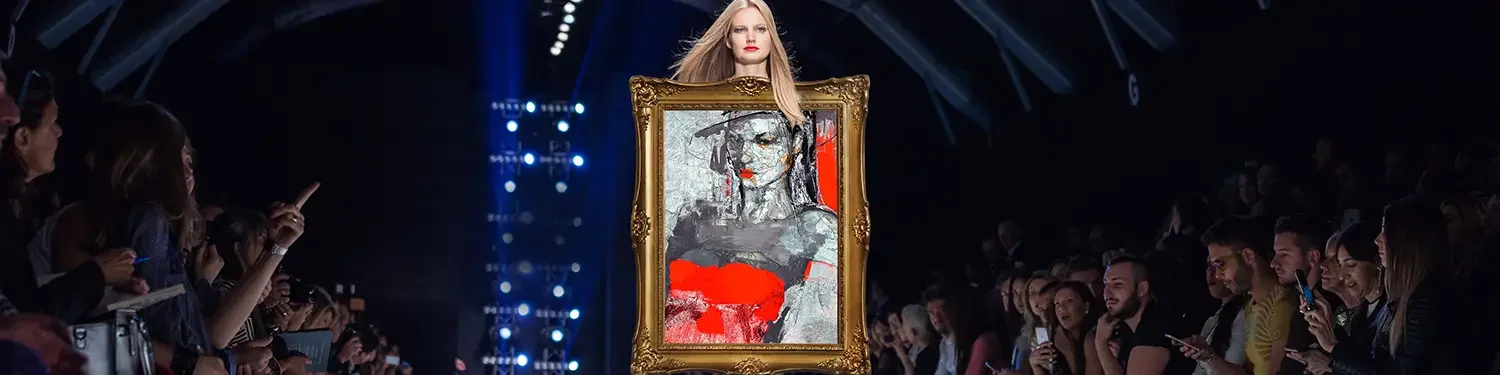
The Value of Presentation
Your audience responds to clean, sharp, accurate images. If you want to win their hearts with beautiful details and move them to buy, sell, award… Then you want to present your art so well your audience can’t resist.
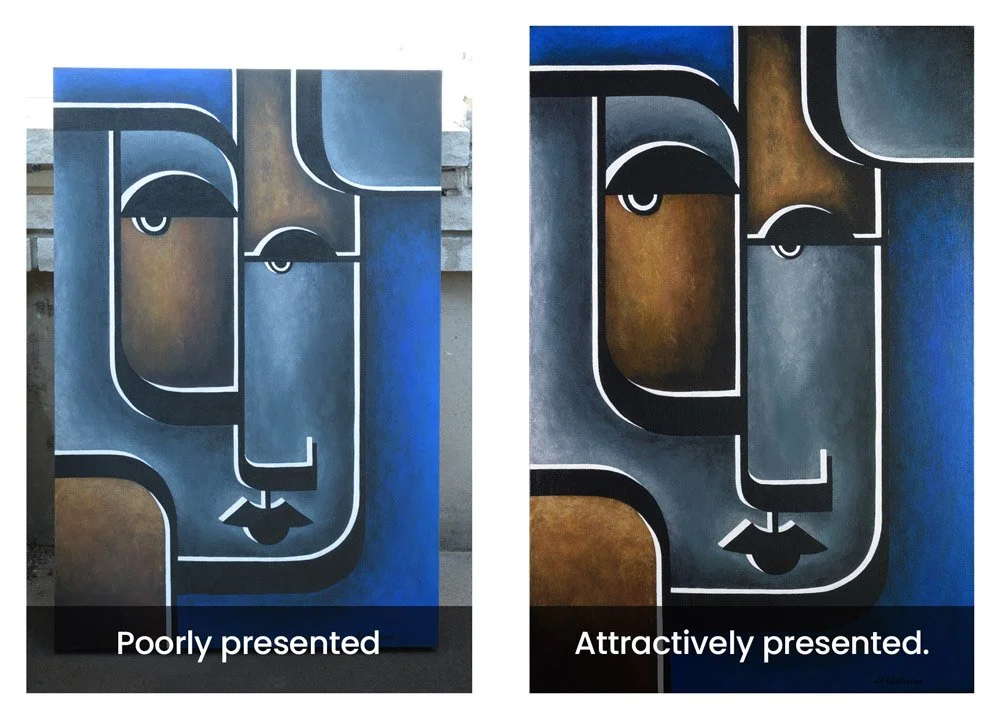
A Comparison
Take a look at the 2 pictures of the artwork above, and answer the following for yourself:
Which looks more valuable?
Which makes the artist look more professional?
Which is more likely to be invited into a gallery or festival?
Which encourages confidence that the art will be shipped safely and private information will be secure?
Which is more likely made by a professional artist?
Look through
your audience’s eyes…
As a professional fine artist, you want to grab your audience’s attention. How you do that is by using the best possible images of your art. Art presentations help you and your art get noticed by more people. More eyes = more attention = improved chance of selling your art. That is what we’re here for, right?
Get more attention = better chance of making sales.
Your audience is more likely to share your posts.
More positive reviews.
Fewer negative reviews.
Galleries are more likely to look, follow, and reach out to you.
Art festivals will be more than glad to include you in their event.
You’re more likely to win awards.
Your audience is more likely to grow.
You will be perceived as professional and trustworthy.
First impressions matter—and last a long time.
Gallery owners say they try not to judge an artist by how they present their work, but sometimes it’s hard.
Perceived value increases when the art’s images have been cleaned up and colour-corrected and the contrast matches the original. Sharpness makes a big difference, too.
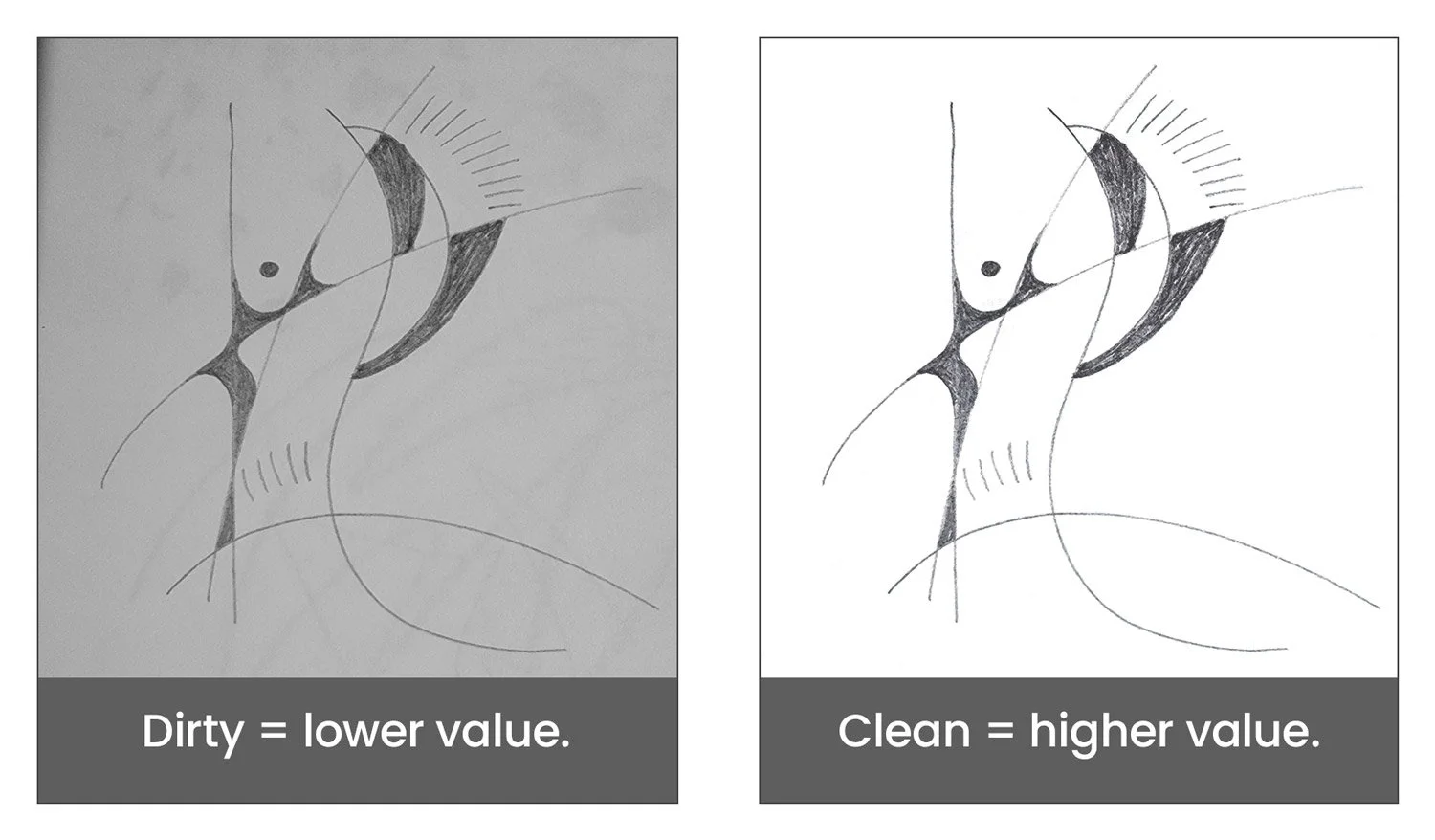
For example…
Success vs Disaster.
As a customer, have you ever ordered something online, and when it arrived, it was not what you expected? Doesn’t it kill the enjoyment of the thing you bought? Of course, you’re forced to make a decision: return or keep?
If you return it, you’ll likely never go back to that vendor again, or
If you do keep it, and you’re like me, you sure aren’t excited about it!
The legal problem can happen when a gallery or customer decides to sue you for misrepresentation.
Yes, accuracy is extremely important.
Make sure you clean up your art, including making it colour accurate, before sharing it with your audience. With AI being a stronger influence on the art market now than ever, it’s imperative that your audience receive what they see on a screen. Be in control of your art’s digital copies.
Consequences if you don’t:
Returns. Not only do you have to give money back, but there’s also a chance the artwork will be damaged or lost during its trip back.
Your reputation flatlining. As we all know, on social media especially, people will share their outrage. So, a mis-step can mean your reputation, future sales and general business success will suffer.
Elimination. By sharing low-quality art, you could miss out on the opportunities you apply to.
And the really big one:
Legal action. Yes, sharing inaccurate images of your art can lead to you being sued for misrepresentation.
Presentation is JUST as important as the artwork itself.
Life is like being in a perpetual interview.
Everyone—including your audience—naturally critiques what they see, hear, and experience. Some will ignore, some will react positively, and some, as we all know, will react with hostility.
I remember going to a gallery opening once for a group show I was in. I bought a new dress but had to go with tired boots because of snow. I’m an artist, not a fashion diva, but I do my best.
The woman in charge of the gallery started toward me—ran her eyes from my head to my (apparently salt-stained) toes—and suddenly took a sharp right and headed anywhere else but towards me.
Nice.
Our art is no different. To be a professional fine artist, you have to show your art to people. You’re preparing it for that eye from head to toe, like in an interview.
Clean it up make sure there are no stains, marks, or scratches.
I’m here to help you make your art look so good your audience can’t resist.